ALFA PROCOMMUNICATION INFRASTRUCTURE Request a Quote

Communication optical cable cabling equipment includes

Communication optical cable equipment includes fiber optic cables, optical transmitters and receivers, amplifiers, network terminals, splicing tools, and connectivity devices essential for high-speed data transmission.Key Components

1. Fiber Optic Cables These are the core medium for optical communication, consisting of one or more optical fibers enclosed in protective jackets. They come in single-mode and multi-mode types, with varying bandwidth, attenuation, and fiber count. Protective layers, such as Kevlar, buffer coatings, and armored sheaths, ensure durability in different environments, including outdoor, submarine, and enterprise installations . 2. Optical Transmitters and Receivers

  • Optical Transmitters (TX) convert electrical signals into optical signals for transmission over fiber.
  • Optical Receivers (RX) convert incoming optical signals back into electrical signals for devices. These devices are critical for maintaining signal integrity over long distances and high-speed networks . 3. Optical Amplifiers Devices like EDFA (Erbium-Doped Fiber Amplifiers) boost signal strength without converting it to electrical form, enabling long-distance transmission and reducing signal loss in telecom and data center networks . 4. Optical Network Terminals (ONT) and Optical Line Terminals (OLT)
  • ONT connects fiber optic cables to homes or businesses, converting optical signals to electrical signals for devices.
  • OLT is deployed at the service provider's end to manage data flow between the central network and multiple ONTs, coordinating upstream and downstream communication . 5. Splicing and Connectivity Tools
  • Fiber Optic Splicers join fiber cables via fusion or mechanical splicing, minimizing signal loss.
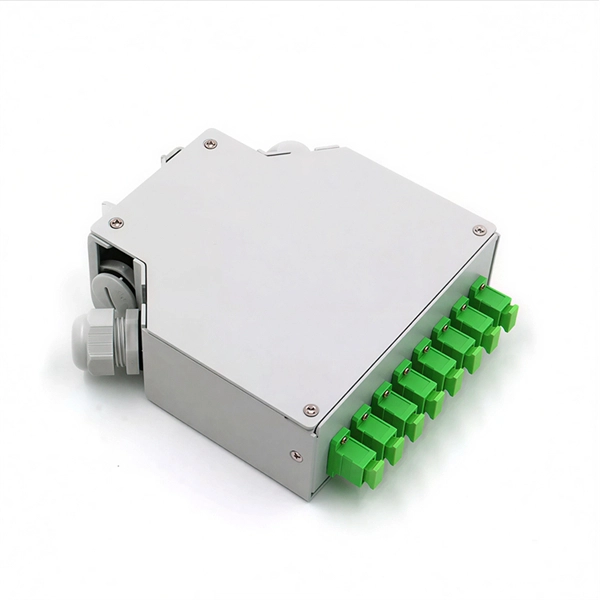
  • Optical Connectors and Patch Panels provide flexible connections and network management.
  • Optical Power Meters measure signal strength to ensure proper installation and maintenance . 6. Supporting Equipment
  • Routers and Ethernet Cables connect ONTs to devices, providing wired or wireless network access.
  • Network Interface Cards (NICs) enable computers to interface with the network, especially in high-speed environments .
Summary

Communication optical cable equipment forms the backbone of modern high-speed networks. It includes fiber optic cables, transmitters, receivers, amplifiers, ONTs, OLTs, splicing tools, connectors, and supporting networking devices, all designed to ensure reliable, high-bandwidth, and low-latency data transmission across telecom, enterprise, and data center infrastructures .

Communication optical cable cabling equipment includes

Fiber-optic communication

OverviewHistoryBackgroundApplicationsTechnologyParametersComparison with electrical transmissionGoverning standards

In 1880, Alexander Graham Bell and his assistant Charles Sumner Tainter created a very early precursor to fiber-optic communications, the Photophone, at Bell''s newly established Volta Laboratory in Washington, D.C.. Bell considered it his most important invention. The device allowed for the transmission of sound on a beam of light. On June 3, 1880, Bell conducted the world''s first wireless telephone transmission between two buildings, some 213 meters apart. Due to its use of an atmospher

What Optical Equipment is Needed for Fiber Optic Network?

Fiber Optic CablesOptical Network TerminalRouterEthernet CablesNetwork Interface CardOptical Power MeterFiber Optic SplicerAn Optical Network Terminal (ONT) is a device that connects the fiber optic cable to your home or business. The ONT converts the light signals transmitted by the fiber optic cable into electrical signals that can be used by your devices. The ONT also provides a connection for your router, which allows you to connect multiple devices to the internet...See more on vsolcn

Videos of Communication Optical Cable Cabling Equipment Includes

more videos

Watch video3:00Structured Cabling Process for a Large Warehouse | Fiber, CAT6 & Network Infrastructure Build-Out Ring and Ping Communications4K views8 months agoWatch video49:06Structured Cabling 05 - Optical Fiber / Fiber-optic Communication Cables NetITGeeks5K viewsOct 3, 2022Watch video12:02Optical Fiber Communication system Prof. Barapate''s Tutorials30.1K viewsFeb 1, 2025Watch full videoSee moreQuizlet

Cabling: Chapter 3 Flashcards | Quizlet

Study with Quizlet and memorize flashcards containing terms like 2000 meters/6560 feet, 90 meters/295 feet, Everything included in

Related Video Reference

This video was associated with the source search result. Verify technical details against current product documentation and project requirements.

Technical note

This reference is intended for preliminary fiber and communications infrastructure research. Optical interface, fiber type, port or core capacity, electrical input and output, enclosure protection, cooling, installation limits and applicable standards must be verified for the specific project.

Still Have a Technical Question?

Use the inquiry form to describe the product category, application, interfaces, capacity and installation environment.

Start a Project Inquiry