ALFA PROCOMMUNICATION INFRASTRUCTURE Request a Quote

For communication optical cables

Optical cables transmit data using light through fibers, offering high-speed, high-bandwidth, and interference-free communication for modern networks.Overview of Optical Communication

Optical communication uses light pulses to transmit information through optical fibers, replacing traditional electrical signals in copper cables ( ). The light acts as a carrier wave, modulated to carry data such as voice, video, and internet traffic. This method is preferred for long-distance, high-bandwidth, and EMI-resistant applications, making it essential for telecommunications, data centers, and cable television networks ( ).

Structure of Optical Cables

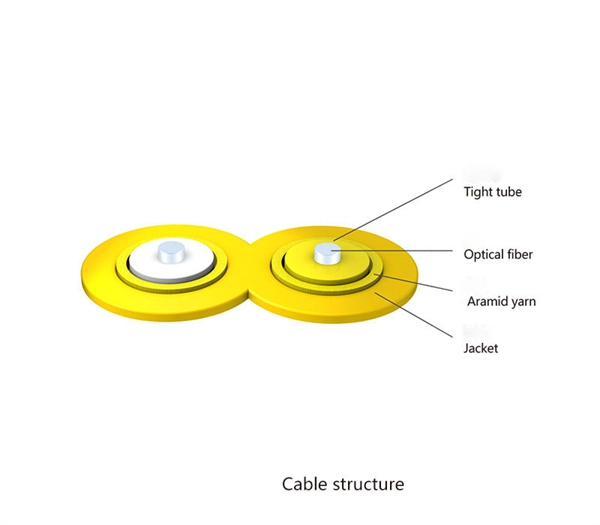
Optical fibers are composed of three main layers ( ):

  • Core: The innermost part, made of glass or plastic, where light travels.
  • Cladding: Surrounds the core and ensures total internal reflection, keeping light contained.
  • Coating: Protective layer that shields the fiber from physical damage and moisture. Cables are designed to protect fibers from strain, bending, and environmental factors, as microbends or cracks can increase signal loss over time ( ).
Types of Optical Fibers
  • Single-mode fibers: Yellow cables, designed for long-distance transmission with minimal signal loss.
  • Multi-mode fibers: Orange or blue cables (OM1, OM3), suitable for shorter distances like data centers or campus networks ( ).
Working Principle
  1. Signal Conversion: Electrical signals are converted into light pulses using a laser diode (LD) or LED.
  2. Transmission: Light travels through the fiber core, guided by total internal reflection.
  3. Reception: At the receiver, photodetectors convert light back into electrical signals for processing ( ).
Advantages
  • High bandwidth and speed: Supports data rates from 100 Gbps to beyond 1 Tbps ( ).
  • Long-distance transmission: Lower attenuation than copper wires.
  • Immunity to electromagnetic interference (EMI): Ideal for industrial and military applications.
  • Compact and lightweight: Small bend radius allows easier installation in dense network architectures ( ).
Applications
  • Telecommunications: Backbone networks, internet, and telephone systems.
  • Data centers and cloud computing: High-speed server interconnects.
  • 5G networks: Optical access networks for mobile connectivity.
  • Military, aerospace, and medical: Secure, interference-free communication and imaging systems ( ).
Installation Considerations

Optical cables require careful handling due to their fragility and sensitivity to bending. Splicing and connectorization must be precise, often using fusion splicing or mechanical alignment to ensure minimal signal loss ( ). Environmental factors like moisture and temperature changes are also critical in cable design to maintain long-term reliability.

Conclusion

Optical communication cables are the backbone of modern high-speed networks, offering efficient, reliable, and scalable data transmission. Their design, from fiber type to protective coatings, ensures performance across diverse applications, from global internet backbones to local 5G networks ( ).

For communication optical cables

Fiber Optic Cable: Types, Uses, Benefits & How to Choose the Right

Types of Fiber Optics CableHow Does It Work?Applications For Various Optical Fiber TypesFAQsNumerous optical fibers, which are very thin strands of glass or plastic that are less than one-tenth the thickness of a human hair, are used to make fiber-optic cables. Data is transmitted over fiber-optic cables using light pulses that travel quickly. The central fiber is encircled by yet another layer of glass, referred to as the “cladding,” whi...See more on lindenphotonics Wikipedia

Fiber-optic communication - Wikipedia

OverviewHistoryBackgroundApplicationsTechnologyParametersComparison with electrical transmissionGoverning standards

In 1880, Alexander Graham Bell and his assistant Charles Sumner Tainter created a very early precursor to fiber-optic communications, the Photophone, at Bell''s newly established Volta Laboratory in Washington, D.C.. Bell considered it his most important invention. The device allowed for the transmission of sound on a beam of light. On June 3, 1880, Bell conducted the world''s first wireless telephone transmission between two buildings, some 213 meters apart. Due to its use of an atmospher

Related Video Reference

This video was associated with the source search result. Verify technical details against current product documentation and project requirements.

Technical note

This reference is intended for preliminary fiber and communications infrastructure research. Optical interface, fiber type, port or core capacity, electrical input and output, enclosure protection, cooling, installation limits and applicable standards must be verified for the specific project.

Still Have a Technical Question?

Use the inquiry form to describe the product category, application, interfaces, capacity and installation environment.

Start a Project Inquiry