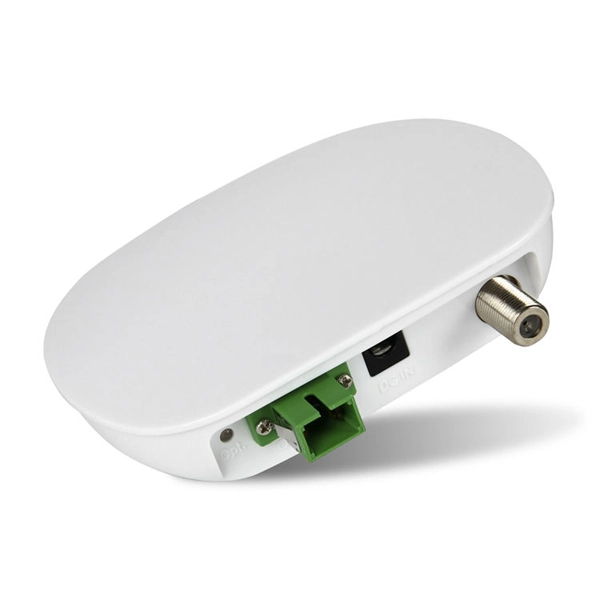
Communication optical cable engineering encompasses the design, construction, installation, and maintenance of optical fiber networks to ensure high-speed, reliable data transmission.Core Components
Optical fiber cables are the backbone of modern communication systems. They consist of a core that transmits light, a cladding with a lower refractive index to contain the light, and protective coatings or buffers to prevent mechanical damage and environmental effects . Fibers are categorized as single-mode (SMF) for long-distance transmission or multi-mode (MMF) for shorter distances . Cables may include multiple fibers, strengthening members like aramid yarn or steel rods, and protective sheaths for outdoor or undersea deployment .
Engineering Processes
Project Planning: Engineers begin by defining network objectives, selecting appropriate fiber types, evaluating compatibility with existing infrastructure, planning cable routes, obtaining permits, estimating costs, and scheduling milestones . Cable Selection and Procurement: Selection depends on transmission distance, data rates, bandwidth requirements, and connector compatibility. Materials are procured to meet these specifications . Installation: Installation involves site preparation, route marking, and careful deployment to minimize bending strain and microbending losses. Techniques vary for aerial, underground, or duct installations, and may include gel-filled tubes for moisture protection . Testing and Maintenance: After installation, engineers test for signal attenuation, dispersion, and integrity. Regular maintenance ensures long-term reliability and performance .
System Components
Transmitters and Receivers: Convert electrical signals to optical signals and back, using lasers or LEDs and photodetectors . Amplifiers and Repeaters: Boost signal strength for long-distance transmission, compensating for attenuation . Multiplexing Technologies: Wavelength-division multiplexing (WDM) allows multiple data streams over a single fiber, increasing network capacity . Standards Compliance: Engineering follows ITU-T recommendations, such as G.652 for single-mode fibers and G.957 for optical systems, ensuring interoperability and performance .
Protective and Structural Considerations
Cables are designed with mechanical protection (buffers, sheaths, armor), environmental protection (water-repellent gels, solid barriers), and strain relief to prevent damage during installation and operation . Specialized designs exist for undersea, aerial, and direct-burial applications, with materials chosen to withstand temperature variations, moisture, and physical stress .
Summary
Communication optical cable engineering integrates fiber design, cable construction, network planning, installation, testing, and maintenance to deliver high-speed, reliable communication. It requires knowledge of optical physics, materials science, civil engineering, and telecommunications standards, ensuring that networks meet current and future demands .