ALFA PROCOMMUNICATION INFRASTRUCTURE Request a Quote

Cable colors for secondary and tertiary distribution boxes

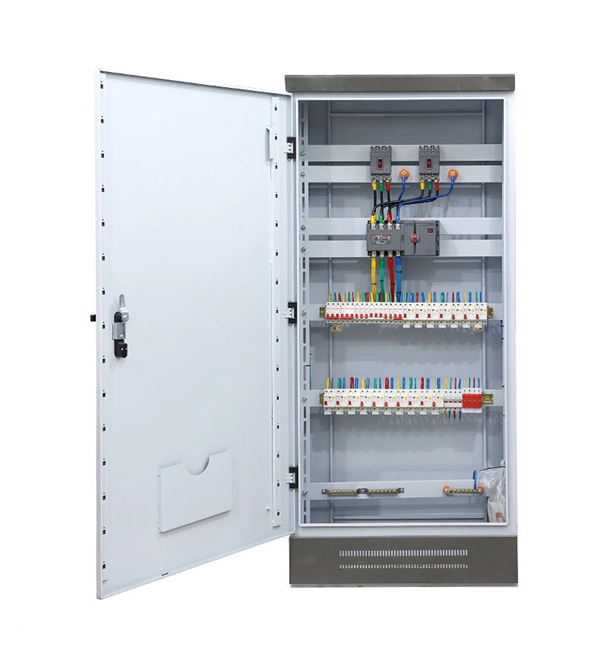
Cable color coding in secondary and tertiary distribution boxes follows standardized schemes to identify live, neutral, ground, and signal lines, ensuring safety and simplifying maintenance.General Color Coding Principles

Cable color coding is used to quickly identify the function of each conductor in a distribution system, reducing errors and improving troubleshooting efficiency. Secondary distribution boxes typically handle branch circuits from the main distribution board, while tertiary boxes distribute power to specific equipment or sub-circuits. Proper color coding ensures that technicians can safely work on these systems without confusion.

Common Standards

North America (NEC/ANSI):

  • Protective Ground (PG): Green, Green/Yellow, or Bare Copper
  • Neutral: White or Gray
  • Live/Phase Wires: Black, Red, Blue (for three-phase systems) or other colors for additional phases Europe and IEC-compliant regions:
  • Protective Ground (PE): Green/Yellow
  • Neutral (N): Blue
  • Line/Phase (L1, L2, L3): Brown, Black, Gray (three-phase AC)
  • DC Systems: Positive often Brown or Red, Negative Blue or Black
Structured Cabling (Data/Telecom)

For tertiary distribution boxes in structured cabling environments:

  • LAN/Data Lines: Blue
  • Critical Services (e.g., fire alarm, security): Red
  • Backbone or demarcation points: Orange
  • PoE or special-purpose lines: Yellow or other distinct colors
Practical Tips
  1. Labeling: Even with color coding, always label cables at both ends to avoid ambiguity.
  2. Consistency: Maintain the same color scheme across all secondary and tertiary boxes to simplify maintenance.
  3. Regional Compliance: Always follow local electrical codes (NEC, IEC, CEC) to ensure safety and regulatory compliance.
  4. High-Density Environments: Use color coding to organize cables in racks or panels, reducing accidental disconnections and speeding up troubleshooting . By adhering to these color standards, secondary and tertiary distribution boxes remain safe, organized, and easy to maintain, while minimizing the risk of wiring errors or electrical hazards.
Cable colors for secondary and tertiary distribution boxes

What is the difference between primary, secondary and tertiary

1. The first-level distribution box is relative to a certain building or factory, which is the first-level distribution box of the cable directly

Technical note

This reference is intended for preliminary fiber and communications infrastructure research. Optical interface, fiber type, port or core capacity, electrical input and output, enclosure protection, cooling, installation limits and applicable standards must be verified for the specific project.

Still Have a Technical Question?

Use the inquiry form to describe the product category, application, interfaces, capacity and installation environment.

Start a Project Inquiry