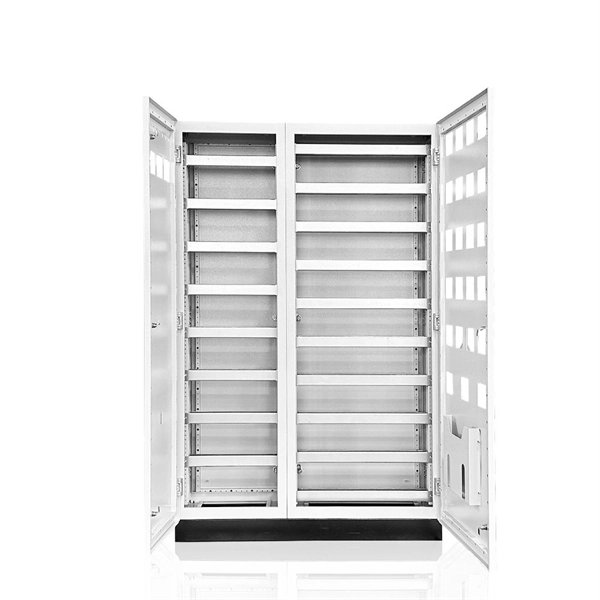
Proper installation of power distribution boxes requires careful site selection, secure mounting, standardized wiring, grounding, protective devices, and compliance with international electrical standards.Site Selection and Environmental Considerations
Distribution boxes should be installed close to the power supply to minimize power loss and ensure safety, in dry, well-ventilated areas free from water, dust, and corrosive substances . For outdoor or high-humidity environments, boxes must have appropriate IP or NEMA ratings to ensure waterproofing and dust protection . In flammable or explosive environments, explosion-proof boxes must be used, following specific material and grade requirements .
Mounting and Height
The bottom edge of the distribution box is typically installed 1.5 to 1.8 meters above the floor for easy operation and inspection . Mounting should be firm and reliable, using suitable brackets or screws to prevent movement due to vibration or collision. Industrial installations may require specific dimensions for IP54-rated panels, with maximum width, height, and depth limits to ensure accessibility .
Wiring Specifications
- Power must be turned off during installation for safety .
- Use high-temperature resistant copper wires with cross-sectional areas meeting load current requirements .
- Maintain neat cable management, proper insulation, and clear labeling of circuits .
- Ensure cable bending radii comply with manufacturer specifications and avoid damage to wire cores .
- Separate circuits of different voltage levels, AC/DC lines, and control lines to prevent interference .
Grounding and Safety Protection
- The metal enclosure, electrical board, and appliance casings must be reliably grounded .
- Connect the protective neutral wire through a terminal board.
- Install leakage protectors, circuit breakers, fuses, and surge protectors for each circuit .
- Use double insulation and covers for live parts in metallic boxes .
Compliance with Standards
Installations should comply with NEC, IEC 60364, IEC 61439, and BS 7671 standards . Key requirements include:
- Accessibility for operation, maintenance, and inspection.
- Adequate working clearance around panels.
- Proper switchgear installation with protection degrees (IP4X, IP5X, IP6X) for live parts .
- Use UL/CE-certified components and record installation details for inspections .
Pre-Installation and Commissioning
- Ensure foundations, wall finishes, and embedded conduits are completed and inspected .
- Verify surge protective devices and grounding connections meet design requirements before energizing .
- Conduct visual inspections and multimeter tests to confirm correct wiring and component integrity .
Maintenance and Labeling
- Label all circuits clearly and consider modular designs for future upgrades .
- Schedule regular inspections and maintenance to ensure long-term reliability . By following these requirements, power distribution boxes can be installed safely, efficiently, and in compliance with international electrical standards, ensuring reliable operation and protection for both personnel and equipment.